University Hospital of Zurich
ClearRead Results From Their Own Study
ClearRead Results From Their Own Study
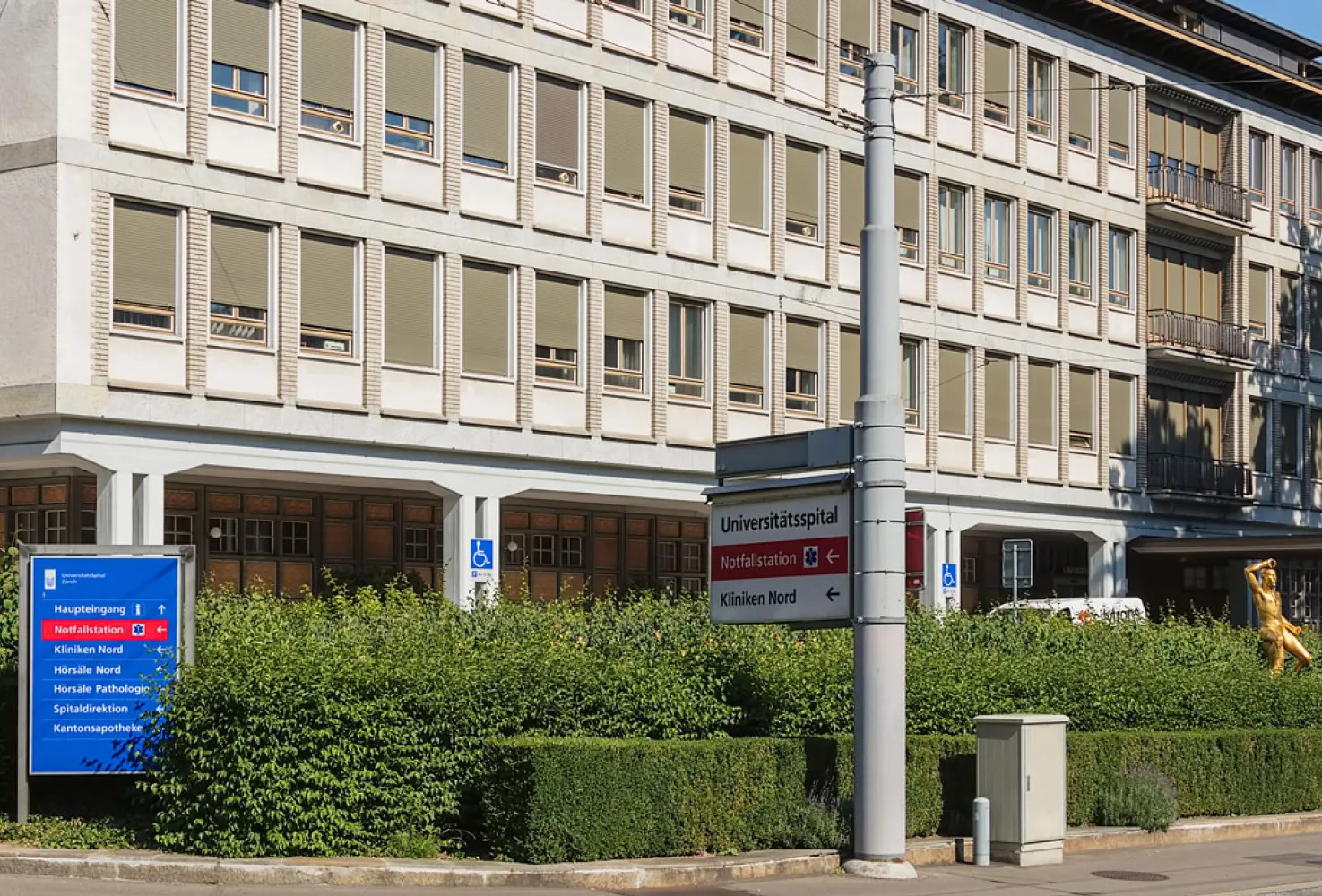
University Hospital Zurich (USZ) is a flagship teaching hospital in Switzerland. With 5 CT scanners acquiring ~35,000 scans/year, 18 radiologists and 30 residents read ~14,000 chest CT studies/year. Operationally, this means that 3 staff radiologists read 70 chest CT studies every day.
Professor Thomas Frauenfelder, MD, is the deputy director of diagnostic and interventional radiology at USZ. His research interest is in tumor imaging, mesothelioma and interstitial lung disease. The following case study is a summary of a virtual meeting with Riverain’s CEO, Steve Worrell to talk about Dr. Frauenfelder’s experiences using ClearRead™ CT.
After implementing Riverain™ Technologies ClearRead CT into its workflow, USZ conducted a study to confirm its clinical and workflow benefits. They noticed radiologists were able to review cases much more efficiently and safely with this type of display, especially new residents.
Detection aids driven by AI are frequently seen for applications like nodule detection. One of the key advantages observed by the USZ radiologists was that ClearRead CT sends the vessel suppressed images back into PACS, where they can be reviewed side by side with the original scan by forming specific hanging protocols. The radiologists liked this type of display because they were able to stay in the system, quickly get an overview of a possible lung nodule, and easily transfer results.
For the study, USZ created vessel-suppressed reconstructions of 100 patients’ contrast-enhanced chest CTs using ClearRead CT. The two sets of images were read by two groups of three radiologists, finding that vessel-suppressed CTs had 21% greater nodule detection rates, much higher interreader-agreement rates, and about 20% shorter average read times.1
The USZ results correlate to previous peer-reviewed ClearRead CT studies, in American Journal of Roentgenology, Computer-Aided Detection of Lung Nodules on CT With a Computerized Pulmonary Vessel Suppressed Function, proving that the FDA-cleared ClearRead CT finds 29% more nodules and is 26% faster reads.2
Efficiency is paramount for the radiology team – being able to separate typically challenging reads from uniquely challenging reads enabled radiologists to see clearly and decide confidently, regardless of their background, experience and skills.

“We expected that the results would be in favor of ClearRead CT concerning the detection rate and reading time, but it was surprising that the advantages were so significant.”
